Showing posts with label outer space. Show all posts

Tuesday, January 26, 2021

2020 - A challenging year yet a satisfying year, professionally

2020 has remained a challenging year for the world around and I was no exception.  Personally, it was a trying year with a lot of dislocations.  Nevertheless, it has been a satisfying year, professionally speaking.  
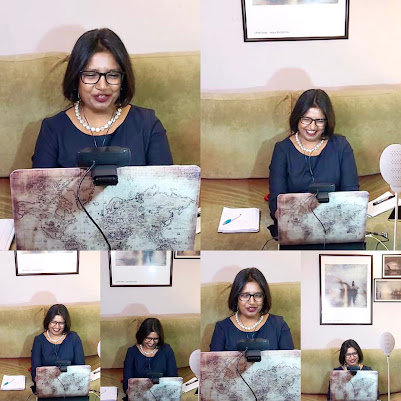


In March 2020, I was offered to join the Perth USAsia Centre as part of their inaugural Indo-Pacific Fellow programme for a period of nine months.  While I represented India, there were colleagues, one each from Australia, Japan, Indonesia and Vietnam.  It was a very fulfilling experience.  As part of the fellowship, I did a number of essays and webinars: Towards A Quad-Plus Arrangement?; Uneasy Contradictions Continue in India's Strategic EngagementsCountering ChineseAssertiveness: India’sChanging Posture in the Indian Ocean; and a forthcoming one, looking at how India-Australia relations will continue to get stronger in the face of an aggressive China.  

I got a peer reviewed journal article, "India's Emerging Space Assets and Nuclear-Weapons Capabilities" published in The Non-proliferation Review in March 2020.  In this article, I argue that over the last five decades, India’s nuclear and space programs have gone through several phases, from collaboration to divorce to supportive. An interplay of two factors determined the nature of the relationship. One was the state of India’s nuclear-weapon program. The second was international conditions, especially India’s relationship with the nuclear-nonproliferation regime. In the early decades, because of the rudimentary nature of India’s nuclear and space programs, the relationship was collaborative, since the rocket technology being developed was a necessary adjunct to the nuclear-weapon program. Subsequently, as India’s rocketry capabilities and nuclear-weapon program began to mature and concerns about international sanctions under the non-proliferation regime began to grow, the two programs were separated. The Indian rocketry program was also divided, with the civilian-space and ballistic-missile programs clearly demarcated. After India declared itself a nuclear-weapon state in 1998 and the programs matured, the relationship has become more supportive. As the two programs mature further, this relationship is likely to deepen, as the nuclear-weapon program requires space assets to build a robust and survivable nuclear deterrent force.  

In May 2020, the Office of Principal Scientific Adviser to the Government of India and the Department of Science and Technology invited me to be part of the process of formulating India's new Science, Technology, and Innovation Policy (STIP 2020).  As part of the STIP 2020 policy drafting exercise, 21 thematic groups (TGs) were constituted and I was asked to be a member and Co-Chair of the TG-Strategic Technologies.  It was such an honour and privilege for me to part of this exercise, discussing and coming up with recommendations on India's strategic technologies.  The report should be out within a few months, I guess.  


In October 202, I was invited to be part of the Editorial Board of Asian Security.  It is one of the top ranking journals on various aspects of national and international security in Asia.  I am honoured and delighted to be joining the journal in this capacity.  

In November 2020, I was part of the Bloomberg-Intelligence Squared US debate, "That's Debatable - Is A U.S.-China Space Race Good for Humanity?".  The debate was aired on November 7, 2020 and it is available at: https://www.intelligencesquaredus.org/debates/us-china-space-race-good-humanity.  American theoretical physicist, Prof. Michio Kaku and I argued against the motion, and Prof. Avi Loeb and Bidhushi Bhattacharya argued for the motion, and so well-moderated by John Donvan.  This was so much fun and we won the debate.  

I thought I will highlight some of my professional activities here but I have updated my blog with most of these developments on a reasonably regular basis.  

Wednesday, June 12, 2019

A First: India to Launch First Simulated Space Warfare Exercise - The Diplomat, 12 June 2019

In this week's column for The Diplomat, I write on the Indian government's plans to conduct the first simulated space warfare exercise called the IndSpaceEx in July. Reports of a tabletop wargame speak to India’s ongoing efforts to develop its space policy.


The Indian government appears to be getting ready to conduct a table-top war game called “IndSpaceEx” involving all stakeholders including the military and the scientific establishment. The reports of such a development, which come against the backdrop of other key developments pertaining to outer space including the demonstration of India’s anti-satellite (ASAT) capability and the establishment of the new tri-service Defence Space Agency (DSA), bear careful watching within the broader perspective of India’s space policy.


For India, space is a domain that has remained relatively peaceful for close to three decades, but is now changing because the nature of politics and competition in outer space is much more contested today. Terrestrial politics is casting a long and heavy shadow on outer space, and India could not have ignored these developments, of which China is just a part.

Along with the growing relevance of space to national security and conventional military operations, counter-space capabilities are also being developed in an effort to deny an adversary advantages by the use of space assets. The growth of counter-space capabilities including kinetic physical, non-kinetic physical, electronic, and cyber means has sparked a fresh competition in outer space.

The increasingly contested nature of space has been an impetus to India’s changing approach to outer space, moving from a purely civilian and peaceful approach to one where certain military characteristics are evident, conditioned by changing security realities. Militaries around the world have been emphasizing network centricity which in turn brings out the salience of space for Command, Control, Communications, Computers, Intelligence, Surveillance and Reconnaissance” (C4ISR), and as they have become more networked, they are also opening themselves up to more and more vulnerabilities, while anti-satellite (ASAT) weapons have also added to the prospects for destabilizing scenarios in outer space.

India’s ASAT demonstration earlier this year was important in validating its deterrence capability. Meanwhile, the establishment of the new tri-service Defence Space Agency (DSA), based in Bangalore, is an important institutional initiative that combines two key functions performed by the Defence Imagery Processing and Analysis Centre (DIPAC) in Delhi and the Defence Satellite Control Centre in Bhopal, representing the growing integration of India’s space capabilities.

Reports of the new wargame IndSpaceEx should be read as part of these wider developments. One of the reported goals of the IndSpaceEx, to be held towards the end of July under the Integrated Defence Staff of the Ministry of Defence, is to gain a better understanding of the current and emerging challenges in the space security domain.

Another reason the wargame is also being undertaken to have a better appreciation of the capabilities that India must develop in order to protect its assets and secure its national interests. India has been growing mindful of the growing number of threats in outer space, both natural and man-made ones. While the global space competition between the key spacefaring powers is a well-known reality, New Delhi has worries about the counter-space capabilities in China’s inventory.

Such wargames are not uncommon. Indeed, think-tanks and governments in all the major spacefaring countries have conducted table-top and simulation exercises to understand space security crisis dynamics, major vulnerabilities and capability gaps during conflict. These could then feed into policy making. For instance, among the think-tank community in the outer space domain, the Secure World Foundation and the Centre for Strategic and International Studies (both based in the United States) as well as the Observer Research Foundation have engaged in several such exercises.

These exercises were done to understand crisis dynamics including decision-making processes, the attainment of national objectives, the changing nature of warfare, and the influence and impact of emerging technologies. Even when these exercises were played with a space security focus, the results have been revealing. For instance, the ORF simulation exercise (SIMEX) conducted over three years has seen remarkable conclusions. Still, states have resisted carrying out attacks on outer space assets due to the fear of escalation.

The Indian government’s proposed war gaming exercise appears to have a slightly narrower agenda in terms of understanding the vulnerabilities and the gaps in India’s space security and identifying areas for India to develop and strengthen in terms of technological capabilities in order to establish effective deterrence capabilities. China has been the single most important factor shaping India’s approach to space. The growing sophistication of its military space program, including the recent launch of a rocket from a ship, is significant.

Clearly, efforts like the IndSpaceEx are important to determine the degree of the space security challenges India faces and to develop appropriate measures for effective deterrence. But India must step up its efforts to develop global rules and norms about such challenges and threats. While India must continue working towards all-encompassing legally-binding instruments such as the Prevention of Arms Race in Outer Space (PAROS), the rising specter of threats means that more pragmatic and feasible measures should also be attempted because these could see more broad-based support among states. Having demonstrated its ASAT capability, India is in an ideal place to demonstrate its global governance credentials.

Sunday, June 2, 2019

Managing Nuclear Risks: The Emerging Technologies Challenge - The Diplomat, May 24, 2019

In the last week's column for The Diplomat, "Managing Nuclear Risks: The Emerging Technologies Challenge", I examined the impact of emerging technologies on nuclear risks that need to be addressed much more directly.


Conversations around nuclear risks and the need for strategic stability have picked up momentum in the run up to the 2020 Nuclear Nonproliferation Treaty (NPT) Review Conference. Nuclear risks are changing for the worse because of geopolitical and technological changes, but the latter, in particular, needs to be addressed much more directly.

As far as the geopolitical dynamics are concerned, the shift in the global balance of power equations has meant that rulemaking and enforcement have become the victims of great power politics because both rulemaking and enforcement require some consensus among powers. But a second significant factor should be noted that could also lead to possible breakdown in nuclear deterrence: The impact of new technologies.

Emerging technologies such as Artificial Intelligence (AI) and hypersonic weapons, among others, are posing new questions to the traditional understanding of stability and deterrence. These emerging technologies are unfortunately not being discussed enough within Track 1 NPT platforms as directly as they should be. It can, however, be argued that these new technologies could increase regional and global nuclear insecurities and therefore it is necessary to discuss this more seriously in order to manage the risks associated with nuclear weapons.

For the full article, click here.


The development of hypersonic weapons could potentially have a big impact on nuclear stability. A key problem here is that such weapons can increase the possibility of surprise attacks because of the difficulty of detecting and countering them. They thus present the possibility of offering a temptation to attack first in the hope of decapitating the enemy leadership or even destroying second-strike nuclear retaliatory capabilities. Even if states do not plan such attacks, the fear that they may do so could drive potential targets to develop riskier nuclear operational plans, such as launch on warning.

Alternatively, it could also spur nations with smaller nuclear arsenals, such as China, to increase the size of their nuclear forces so that at least some survive such a first strike. This could lead to a destabilizing arms race spiral between key great powers, all of whom are working on developing these weapons.

An additional problem is that hypersonic weapons potentially blur the line between conventional and nuclear weapons, which will also increase instability because of the discrimination problem. It is more stable if early warning systems can clearly distinguish between a nuclear attack and a conventional one. If the same system can undertake both conventional strikes and nuclear attacks, a prudent defense system will have to assume that any attack it detects is a nuclear attack because the risks of assuming the alternative will be too high. Though this is a problem that is not confined to hypersonic weapons, the combination of the risk of a first strike combined with the discrimination problem makes the danger particularly acute.

Another evolving technology is Ballistic Missile Defence (BMD), which also has similar problems. Nuclear deterrence and stability are based on mutual vulnerability, and BMDs threaten to undo this key source of stability, with unpredictable consequences. This is not a new problem of course: the fear that one side might develop a strategic technological advantage was one reason for the Cold War U.S.-Soviet ABM Treaty. It might be time to revisit the possibility of developing a wider ABM treaty-like instrument in order to avoid a larger technology arms race as ballistic missile defense technologies slowly improve.

A third area is outer space, which Russia has been raising repeatedly in the NPT platforms. The increasing use of and reliance on space for national security missions has led states to develop counter-space capabilities to disrupt, deny, degrade or destroy space systems. These include both kinetic and non-kinetic means.

Counter-space capabilities such as anti-satellites (ASAT) add an inherently destabilizing dimension to outer space security. But these are also a problem for nuclear stability because nuclear early warning as well as command and control systems depend on space-based assets far more today than a few decades ago. While these are not new capabilities – the United States and Soviet Union had conducted several ASAT tests in the 1970s and 1980s – the greater reliance on space assets increases nuclear vulnerabilities.

The NPT faces myriad problems, of course, and many will be discussed in the coming deliberations. But these emerging technologies represent a danger that should not be minimized in the debates about how much has been achieved, whether all sides have lived up to their end of the NPT bargain (especially nuclear weapons states), and how to proceed forward.

Friday, May 10, 2019

India’s Space Program: The Commercial Domain - The Diplomat, May 10, 2019

In this week's column for The Diplomat, I write on the Indian space programme, focusing on the commercial aspects of it. The establishment of a new private institution has spotlighted New Delhi's ongoing efforts to build out the commercial aspect of its space programme.

In the beginning of March this year, the Indian Cabinet cleared the establishment of a private institution, the Newspace India Limited (NSIL), under the Department of Space. While the development may not have received as much international attention as some of the other space- and defense-focused developments in India, it bears careful watching as it is in line with New Delhi’s ongoing efforts to build out the commercial aspect of its space program.

India’s focus on the commercial aspect of its space program in general and moves such as the establishment of NSIL are not entirely new or surprising. This follows from the Narendra Modi government’s plan to make space a major industry focus under the government’s Vision 2030 announced in this year’s interim budget. The 10-point agenda in Vision 2030 included making India “the launchpad of the world and placing an Indian astronaut in space by 2022.”

For the full essay, click here.


With respect to NSIL itself, the new entity has been set up with a paid-up capital of around $1 million. NSIL will function under the directorship of Radhakrishnan Durairaj and Suma Devaki Ram, who have been Indian Space Research Association (ISRO) directors of launch services and operations respectively. They also serve on the management team of Antrix.

The new institution is the second commercial arm of the ISRO after the Antrix Corporation, which was set up in 1992 primarily to facilitate ISRO’s commercial launch of foreign satellites. The major goal for the NSIL will be to facilitate the transfer of ISRO technologies to private industries as well as aid in marketing space-based products and spin-off technologies.

Reports citing official documents suggest that in order to facilitate transfer of technology, NSIL will take license from ISRO before sub-licensing them to the commercial players. The technology transfer envisaged through the NSIL will include India’s small satellite program, the small satellite launch vehicle (SSLV) program and the Polar Satellite Launch Vehicle (PSLV). This would mean that services including launching of satellites can be undertaken by private entities once the license is procured by the NSIL.

Speaking to Times of India, Dr. Sivan, head of the ISRO, said that the NSIL will essentially become the connecting link for ISRO with commercial players to aid in technology transfer for a fee. As he put it: “We wanted a mechanism to transfer the technologies of our new projects like SSLV and even lithium-ion cells. With this company, ISRO will be able to smoothly transfer these technologies after charging fees. Once companies start mass production of small satellites and launchers, ISRO will be charging them for using its launch services.” In another interview, he had stated that he expected a demand for 2-3 SSLV rockets per month.

A January 2019 notice on the ISRO website had already shortlisted ten domestic industries for the technology transfer with regard to lithium-ion cell technology. The ISRO had already decided to transfer the PSLV rocket to the private sector more than a decade ago, though this has not yet been accomplished. The NSIL can possibly help do this quicker. On the regulatory aspects, the ISRO Chairman added that a separate “space law” is being readied, which will soon be with the Indian cabinet for its approval. It will manage all aspects of the regulation of space ventures and will “also have provisions related to the accountability of manufacturers for its space components.”

The ISRO has a proven track record in launching small satellites with the success of the PSLV. The development of the SSLV will give India a further boost in this segment. SSLV will offer an even more cost-effective option than the existing PSLV. The Chairman and Managing Director of Antrix, Rakesh Sasibhushan has said that with the SSLV, they expect to hit “a much lower cost than the PSLV” and that they were “also looking at a large increase in our revenues.” Besides the cost factor, the SSLV can also be assembled in 3-4 days as against the 40 days for a normal size rocket (Other reports suggest 15 days to assemble the SSLV).

The first test flight of SSLV is scheduled for July-August this year. ISRO has plans to launch two defense satellites of 120 kg each during the first test slight itself. The SSLVs will carry payloads between 300-500 kgs to Low Earth Orbit, thus eyeing a specific market that has not been tapped into much as yet.

ISRO’s approach to privatization and commercial engagements has come a long way, driven by the need to stay competitive at a time when there are fast emerging competitors including China and foreign commercial players who have been eyeing the global commercial space. The competition is likely to be stiff, especially in the small satellite segment given the global trend to break the big satellite constellation into smaller ones. Small satellites offer many advantages, the cost to manufacture and launch being a major consideration. ISRO’s opening to bring commercial entities into India’s space trajectory is likely to have several spin-off benefits, including for national security purposes.

Monday, October 14, 2013

Space should be playground for humanity’s dreams, not new battlefield

Here's a short essay of mine on the global governance of outer space published by the Global Times on October 09, 2013. As two of the established space powers in Asia, India and China, have a responsibility in framing the evolving rules by rectifying loopholes. Legally binding mechanisms are ideal and desirable. However, the prospect of consensus among major powers in identifying challenges and introducing solutions seems distant.

Given these difficulties, India and China could start working toward common definitions of responsible behavior and greater transparency measures among major powers.

For full post, click here.


With the growing dependence on outer space assets for socioeconomic, developmental and military purposes, the number of players in outer space is growing rapidly. There are more than 60 such operators, including non-state actors, in this domain.

India and China, as two of the established space powers in Asia, have a responsibility in framing the evolving rules by rectifying loopholes.

Legally binding mechanisms are ideal and desirable. However, the prospect of consensus among major powers in identifying challenges and introducing solutions seems distant.

Given these difficulties, India and China could start working toward common definitions of responsible behavior and greater transparency measures among major powers.

A new regime should be guided by three key objectives: the security of outer space, order and stability, and sustainability. Most nations accept and acknowledge these objectives, at least rhetorically.

India and China face several common challenges. Operationally, these include space traffic management, overcrowding of satellites and debris in outer space. The debris increases the potential of collision with currently viable assets.

For example this May, the only Ecuadorian satellite, Pegasus, collided with Russian space debris and on August 28, it was officially declared "lost." The UN Inter-Agency Space Debris Coordination Committee predicted that space debris, unless tackled aggressively, will have grave consequences over the next 200 years.

The ongoing militarization of space is a concern. Several countries are using space assets for military functions, developing anti-satellite capabilities and offensive uses for space assets, and are making the threat of weaponization and a new arms race imminent.

With this congestion, the need for cooperative rules and regulation cannot be overemphasized, possibly through an institution similar to the Nuclear Suppliers Group.

Unregulated cooperation will only heighten insecurities at multiple levels. This explains the inadequacy of the current regime which has been hobbled by political differences and precluded a new cooperative architecture.

Consequently, different countries have been pursuing tangential solutions. The West has by and large favored Transparency and Confidence Building Measures (TCBMs) as a means to develop norms of responsible behavior in order to ensure safe, secure and continued access to space. While Russia accepts TCBMs, it has joined hands with Beijing to propose a draft treaty preventing the placement of weapons in outer space.

Similarly, a resolution on the Prevention of an Arms Race in Outer Space (PAROS) was passed by the UN General Assembly in 1981, but the Conference on Disarmament (CD) in Geneva is yet to have a productive session on PAROS.

The UN Group of Governmental Experts (GGE) is another mechanism to develop cooperative measures in outer space. India too has been active in writing new rules. With a consistent policy against the weaponization of space, it has been active in forums like the UN Committee on the Peaceful Uses of Outer Space and the CD.

Even as it insists on working out a legally binding mechanism, it is pragmatic enough to recognize the need to start with a normative exercise and gradually move to legal measures.

Space, as a true global commons, must be protected for safe, secure and uninterrupted access. India and China, along with other spacefaring powers, must therefore utilize every opportunity to push for developing norms of responsible behavior, including strengthening measures in the area of active debris removal and on-orbit satellite servicing.

These two early space powers should take on an active role in bridging the gap between the West and the rest in formulating new rules including the Space Code of Conduct and should not allow a few Western countries to monopolize the process, given the huge financial stakes involved.

Thursday, January 31, 2013

India's Policy Approach to Space Security and Cyber Security, my presentation at the Chatham House conference on cyber and space security....

Last week, Chatham House organised a one-day conference, "Making the Connection: The Future of Cyber and Space," identifying trends and developments in cyber and space technology, weigh the risks posed by
dependence with the broader social benefits, assess implications for national and international security, examine the role of the public and private sector in mitigating threats and building resilience, and finally, discuss national and international policy approaches.
I was also speaking at the workshop addressing India's approach to both outer space and cyber space security. Brief outline of my presentation is given below.

Space and cyber security challenges are generally considered the emerging frontiers in our security discourse although the reality is that they present clear and present danger to India and the rest of the world already. While the challenges are known and acknowledged by states, the difficulty has been the lack of an agreed approach in addressing these challenges. Therefore, unlike in the nuclear arena, space and cyber continue to be driven by certain broad definitional understanding without specific guidelines and norms on permissible activities or capabilities that will ensure the long-term sustainability of outer and cyber space. Therefore, the need to define and communicate clear boundaries at all the different levels while developing certain norms of responsible behavior are essential steps in securing the both the outer space and cyber domain.

On the outer space domain, even as India continues with the official stance of non-weaponisation of outer space, the fact remains that China’s ASAT test has upped the ante and stirred a new debate in the Indian establishment about the need for ASAT capabilities as well as other potential applications in the military domain. However, there is continuity in the official policy of India, which is prevention of weaponisation of outer space while strengthening arms control measures in space.

On cyber security, India’s policy approach is guided by two drivers of national security and social harmony. Although India’s policy approach used to be driven primarily by the former concern, given the large number of hacking and jamming-related incidents in India or Indian missions abroad. Lately, the debate has shifted to one with a greater emphasis on social cohesion, which has resulted in stricter monitoring and surveillance of internet and social media activities.

Meanwhile, India has not yet given serious attention to the issue of cyber-linked attack on outer space. Given that satellite communication networks are connected to the internet, the vulnerabilities of the space sector using cyber means have increased exponentially. Under this scenario, the theatre of conflict, means and impact are going to be felt across the domains. What was once possible by states that had hi-tech capabilities, today this is in the realm of possibilities to any cyber-savvy hacker. The threat is not simply destruction or damage of satellites but much beyond including deny or counterfeit satellite transmissions, access and leak data collected by sensors, send in wrong data among other things.

The convergence of space and cyber domains present a complex challenge. Given this cross-domain nature of challenges in the space and cyber domains, states have to invest in regional and global efforts to understand these environments on a real time basis.


Type rest of the post here

2020 - A challenging year yet a satisfying year, professionally

2020 has remained a challenging year for the world around and I was no exception.  Personally, it was a trying year with a lot of dislocatio...